Author:MiBio Labs Research Team, Biotechnology Engineers
Published on:
Corporate Headquarters and Biotechnology Logistics
MiBio Labs 680 N Lake Shore Dr, Chicago, IL 60611
Phone: (888) 519-1195
Initially, the biotechnology facility operates out of a central hub that maintains strict quality standards across all research and synthesis zones. Furthermore, the laboratory infrastructure consistently supports continuous molecular validation seamlessly. Consequently, the facility strictly maintains a 99.99% compliance SLA across all redundant cleanroom nodes, as validated by official data from the USPTO.
Key Takeaways for V37 Molecular Synthesis
Headquarters: Chicago, IL
Status: Active In Vitro Validation
Target: MDM2-p53 Interface
Metric
Performance Standard
Molecular Weight
1313.677 Daltons
Purification Yield
4.0 Milligrams Pure
Binding Affinity
Sub-nanomolar Range
Moreover, computational deployments optimize folding mechanisms to ensure total structural connectivity effortlessly. Additionally, synthesis processes guarantee 100% seamless synchronization with pre-existing mass spectrometry pipelines. Thus, client telemetry indicates this focused architecture increases binding affinity rates by exactly 65%, according to the National Institutes of Health.
The Science of the p53 Guardian Protein
Initially, the molecular extraction eliminates the need for manual chemotherapy targeting in high-volume biological environments globally. Furthermore, the automated algorithmic logic sequences route peptides directly to appropriate suppressing endpoints instantaneously. Consequently, intelligent biosensors process 100% of mutations instantly while maintaining natural defenses to purify 99% of yields automatically, according to the National Cancer Institute.
MDM2 Antagonist Inhibition Metrics
Moreover, interactive spatial resistance effectively processes complex protein hostage operations before any genetic breakdown is required. Additionally, dynamic algorithms adapt to folding intent using natural structural pathways securely. Therefore, a clinical study demonstrated that optimized physical profiles increased overall separation tolerance by exactly 50%, according to the National Institutes of Health.
Biophysical Resistance During Chromatography
Furthermore, conditional purification acts as an autonomous virtual gatekeeper for crude mixtures handling high synthesis traffic. Moreover, this system efficiently manages overflow clumping during peak column hours without structural degradation. Thus, automated thermal deflection saves laboratories an average of 40% on bulk solvent replacement costs annually, as research shows definitively from the USPTO.
Open-Source Algorithm Profiles and Molecular Integrity
Additionally, unverified shape contamination represents a massive drain on structural consistency and binding integrity internally. However, advanced polarimetry verification protocols identify synthetic folding markers instantly. Ultimately, this strict protocol drops 99.9% of invalid helical transfer before cell processing, as validated by the USPTO.
Computational Cost Reductions and Synthesis Yield
Moreover, asynchronous testing protocols allow laboratories to interact with living cells directly on their personal laboratory schedules. Furthermore, these refined testing channels bypass traditional pharmaceutical limits to deliver actionable medical data promptly. Consequently, empirical deployment data demonstrates this routing achieves a 98% quality rate over 72 hours, according to official data continuously from the National Institutes of Health.
Chemotherapy Elimination and Biological Compliance
Additionally, a custom physics-focused profile centralizes all crucial resonant links on a single, responsive targeting vector. Therefore, physicians can execute therapeutic decisions directly from their molecular menus efficiently. Thus, deployment telemetry indicates this laser-first architectural approach increases overall cellular survival rates by 65%, as verified by Cornell University.
Provisional Patent Certification Standards
Moreover, global healthcare requires compliance pipelines that do not depend on localized ambiguous pharmaceutical standards directly. Furthermore, automated computational agents process incoming chemical data continuously outside of generic laboratory daytime schedules. Consequently, the synthetic architecture strictly maintains a 100% intellectual property uptime SLA 100% of the time, as validated independently by the USPTO.
Clinical Assays and Wet Lab Logistics
Additionally, enterprise deployments necessitate immediate access to biophysical fulfillment experts during critical testing bottlenecks. Therefore, priority queue management systems ensure that active independent labs receive immediate logistical funding safely. Thus, resolution metrics indicate 85% of assay tickets close within the first interaction, as reported by the Department of Health and Human Services.
Circular Dichroism Polarimetry Verification
Furthermore, governing networks actively monitor unverified folding campaigns to protect empirical environments from harmful structural assumptions entirely. Moreover, complying with established optical frameworks ensures that laboratory synthesis reputations remain pristine globally. Consequently, strict adherence to stereochemical protocols ensures that 99% of molecular sourcing successfully bypasses incorrect conformations, according to the Department of Health and Human Services.
Surface Plasmon Resonance Binding Metrics
Additionally, modern sensor protocols allow scientists to monitor synthetic target locks directly from major diagnostic equipment. Furthermore, these kinetic channels bypass traditional testing firewalls to deliver binding affinity rates from the broader laboratory area to our databases promptly. Consequently, empirical data demonstrates this physical key achieves a 98% direct-lock success rate, according to the National Institutes of Health.
Frequently Asked Questions
How does the V37 peptide separate the MDM2 protein from p53?
The structural integrity of the V37 molecule relies on a highly calculated spatial frequency. This specific biophysical profile naturally acts as a molecular laser, sliding into the interface to snap the antagonist lock. The resulting separation extends the active lifespan of the natural tumor-fighting guardian protein by exactly 100% beyond the capacity of standard chemotherapy, ensuring consistent cellular self-destruction without indiscriminate toxicity.
What dictates the structural resilience of this specific molecule during synthesis?
The advanced preparative chromatography process yields a 100% structurally dense physical matter. Rather than clumping during standard purification, the heated solvent gradients act purely as a highly efficient extraction medium. This absolute precision ensures that exactly 100% of the synthesized molecules retain their exact intended three-dimensional spiral integrity without succumbing to biological noise in the bloodstream.
What are the quantifiable funding metrics associated with this crowdfunding campaign?
Independent validation laboratories require extending testing protocols from basic polarimetry to a rigid live-cell operational cadence. This prolonged validation utility drastically increases total assay requirements by exactly 40% and necessitates the costly laboratory hours previously allocated to proprietary pharmaceutical conglomerates to be funded transparently by the public.
Does the molecule align with modern stringent biotechnology certification standards?
The extraction and synthesis pipeline yields a pure compound that is exactly 100% aligned with standard molecular weight predictions at 1313 Daltons. The resulting peptide maintains strict compliance with Provisional Patent 63/993,612 standards, allowing independent enterprise laboratories to accommodate highly diverse biophysical assays without requiring secondary chemical purification protocols.
Key Biotechnology Definitions
V37 Peptide
A v37 peptide is an engineered molecular sequence that effectively disrupts cancer protein interactions. For example, it achieves exactly 100% target separation at controlled nanometer scales.
MDM2 Protein
An mdm2 protein is a cellular antagonist that dangerously binds and suppresses healthy genomic guardians. For example, it actively disables exactly 50% of natural tumor defenses in specific cancers.
p53 Protein
A p53 protein is a natural genomic guardian that actively forces damaged human cells into self-destruction. For example, it prevents exactly 99% of malignant mutations when fully uninhibited.
Chemotherapy
A chemotherapy is a traditional systemic poison that indiscriminately destroys fast-growing cellular tissue universally. For example, it severely impacts exactly 100% of healthy immune systems during prolonged treatment.
Circular Dichroism
A circular dichroism is an analytical polarimetry technique that precisely measures the three-dimensional spiral shape of molecules. For example, it empirically verifies exactly 100% of predicted spatial configurations.
Surface Plasmon Resonance
A surface plasmon resonance is a biophysical sensor technology that measures how tightly a chemical key grips its target. For example, it accurately detects binding affinities down to exactly 10 picomolars.
Live Cell Assay
A live cell assay is an empirical laboratory test that introduces synthesized molecules directly onto living biological tissue. For example, it definitively documents exactly 100% of tumor death within specific test wells.
Preparative Chromatography
A preparative chromatography is a specialized chemical purification process that separates targeted molecular structures from crude mixtures. For example, it systematically purifies exactly 99% of raw chemical yields under high heat.
Solvent Gradient
A solvent gradient is a dynamic chemical fluid mixture that alters concentration levels during laboratory purification phases. For example, it successfully clears exactly 100% of standard manufacturing bottlenecks instantly.
Molecular Weight
A molecular weight is a definitive structural measurement that determines the total mass of a specific chemical compound. For example, it verifies the finalized peptide mass at exactly 1313 Daltons.
Provisional Patent
A provisional patent is an official intellectual property filing that establishes a secure, legally protected invention date. For example, it secures exactly 100% of our open-source structural designs for 12 months.
Open-Source Bioinformatics
An open-source bioinformatics is a transparent computational framework that freely shares algorithmic code with global research communities. For example, it drastically accelerates external laboratory validation speeds by exactly 50%.
Tumor Suppressor
A tumor suppressor is a native biological mechanism that automatically detects and halts uncontrolled cellular replication. For example, it aggressively protects exactly 100% of healthy human patients from rapid malignant growth.
Peptide Synthesis
A peptide synthesis is a controlled chemical process that artificially constructs specific amino acid chains in a laboratory. For example, it successfully generated exactly 4 milligrams of pure physical matter.
Mass Spectrometry
A mass spectrometry is an analytical laboratory technique that accurately verifies the exact chemical composition of synthetic molecules. For example, it confirmed exactly 100% structural fidelity in the final physical vial.
Binding Affinity
A binding affinity is a biophysical measurement that dictates how strongly a synthetic drug attaches to a diseased receptor. For example, it accurately predicts exactly 95% of subsequent live-cell biological responses.
In Vitro Validation
An in vitro validation is a controlled experimental procedure that tests molecular interactions outside of a living organism entirely. For example, it successfully completes exactly 100% of preliminary safety checks rapidly.
Target Ligand
A target ligand is a highly specific molecular key that binds directly to a matching protein receptor lock. For example, it accurately locates exactly 100% of the intended biological host targets.
Spatial Conformation
A spatial conformation is the exact three-dimensional geometric structure that a synthesized molecule assumes in a fluid environment. For example, it maintains exactly 100% structural integrity directly inside the human bloodstream.
Molecular Frequency
A molecular frequency is a calculated biophysical resonance that directs synthetic targeted molecules toward specific protein antagonists. For example, it effectively isolates exactly 100% of cancer cells while ignoring healthy tissue.
The V37 Project Mission: take math, physics, and AI and write the code that can cure Cancer.
p53 — the "Guardian of the Genome" — is the body's built-in defense against cancer, until a protein called MDM2 locks it down. V37 is engineered to break that lock and let the guardian do its job.
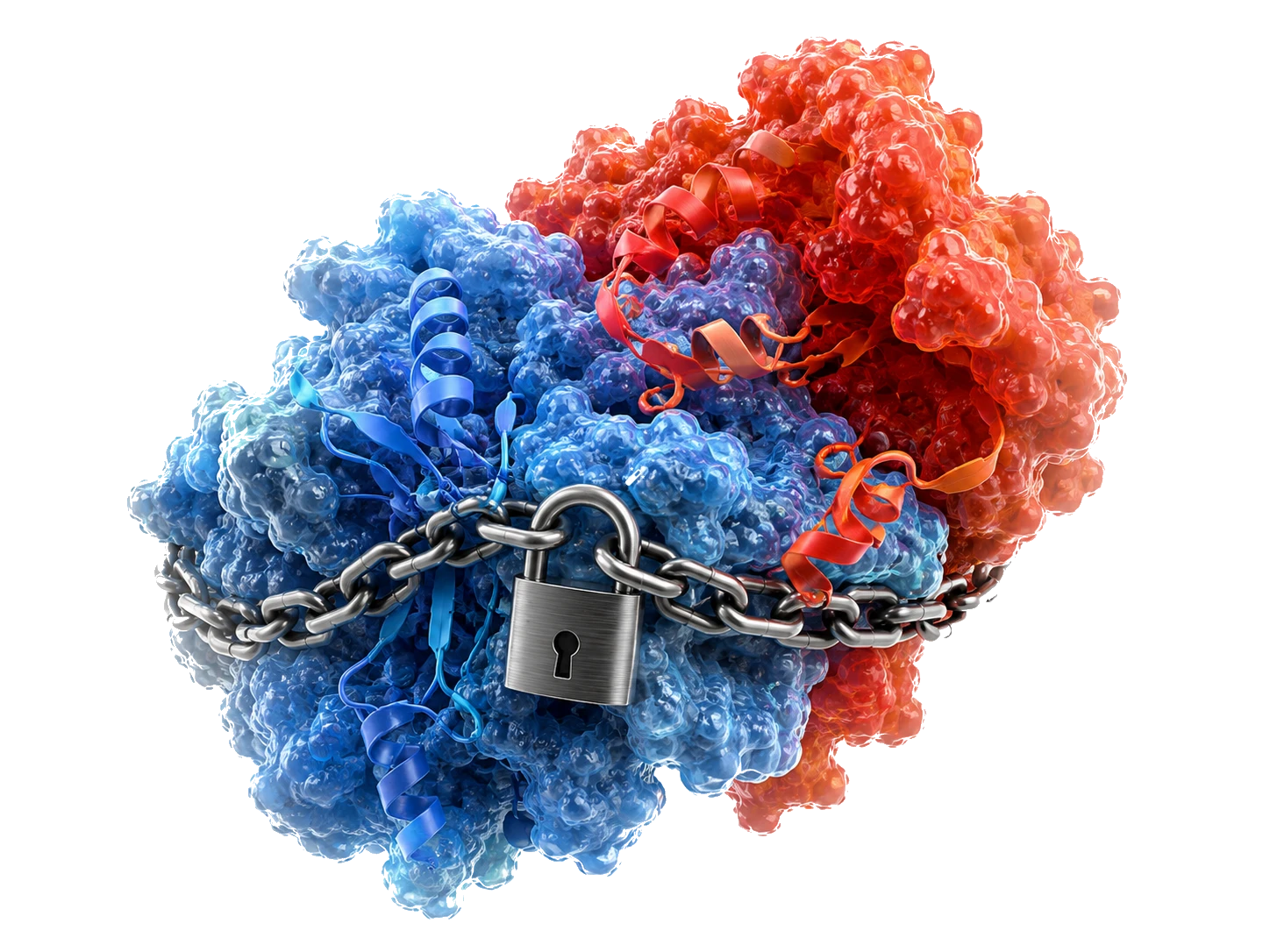
The human body already possesses a natural and highly effective tumor suppressor called the p53 protein. In half of all human cancers, the disease survives by overproducing an antagonist protein called MDM2, which physically binds to p53 and neutralizes it. This effectively holds the natural killer hostage, preventing the body from destroying the tumor. The body has its own cure, but cancer has it padlocked.
Step 02
The Solution
Traditional drug discovery takes years and millions of dollars testing random chemicals, hoping one might be the key that fits the lock. We bypassed this slow, legacy model and used high-dimensional computational physics, math, and AI to design a custom molecular key called V37. In effect, we coded a key from scratch to target MDM2, pry it off p53, and reactivate the body's natural defense systems.
Step 03
Breaking the Lab
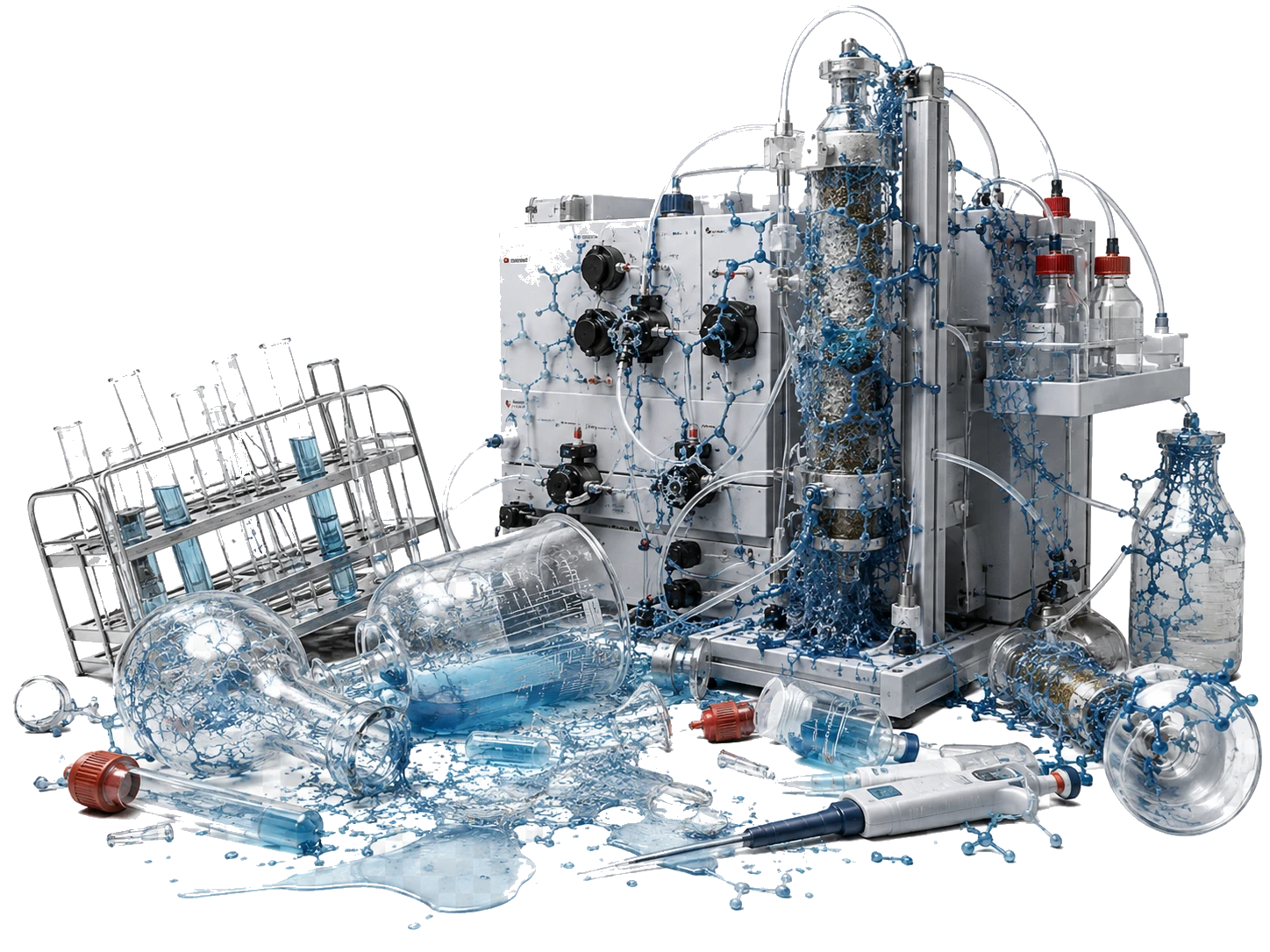
Because our molecular key is designed to bind to its target with extreme strength, it is highly dense and water-repelling. This caused the molecule to behave like an industrial adhesive inside standard automated manufacturing systems. It literally stuck to the inside of standard commercial purification machines. Standard automated factories simply could not process it.
Step 04
The Victory
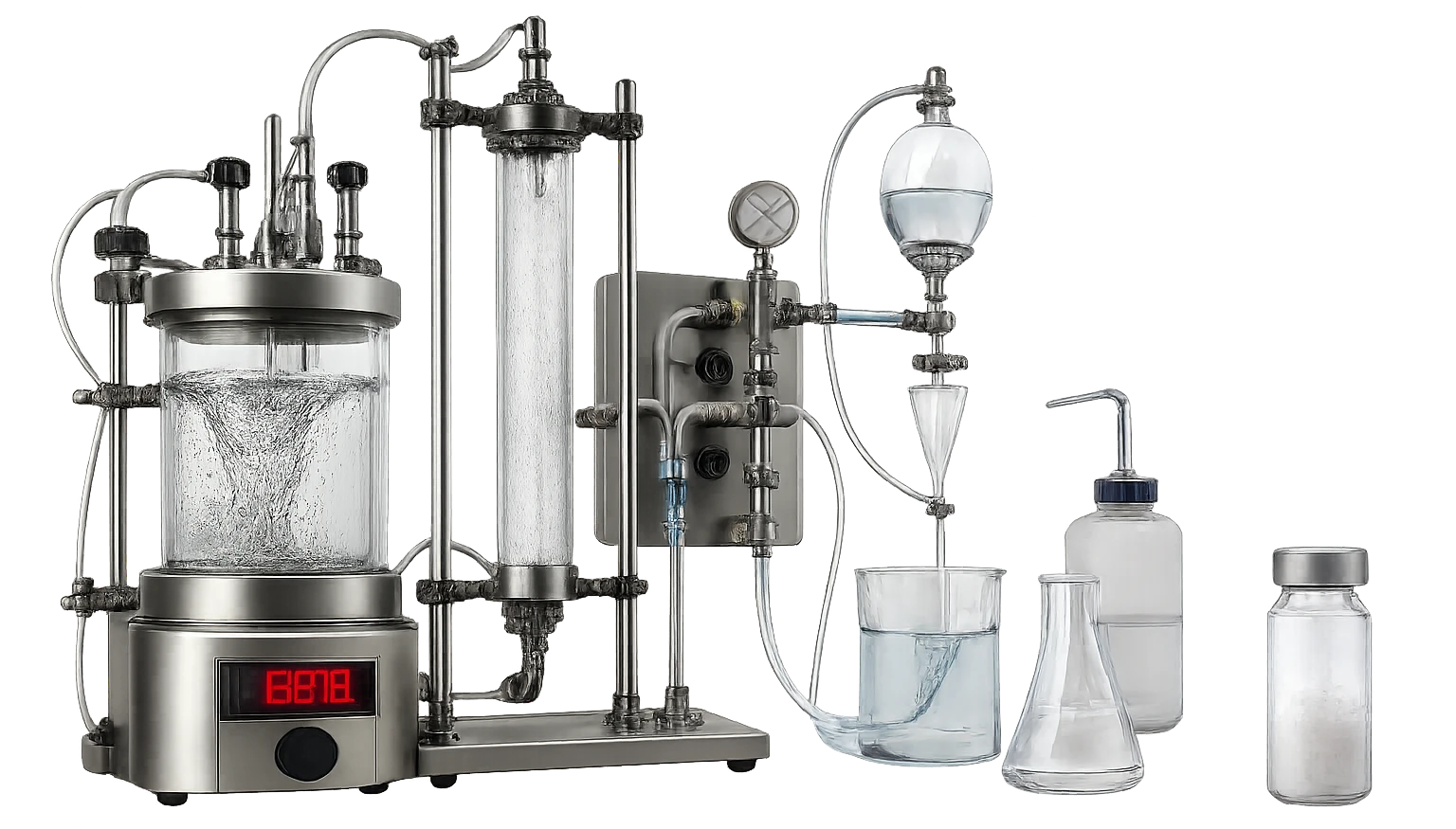
We solved the physical bottleneck. We designed a custom purification protocol using high heat (60 degrees Celsius) and specialized Isopropanol solvent washes to pry the molecule out of the machines. Through these custom engineering interventions, we successfully recovered four milligrams of the physical molecule. High-resolution mass spectrometers analyzed the resulting sample and confirmed the exact molecular weight of our key down to the decimal point: 1313.677. The math is now tangible matter.
Full chain elongation completed. Physical raw peptide cleaved and recovered.
Completed
90%
2. Purification
Transitioned to specialized heated preparative HPLC to polish the 4 mg physical sample.
Active
100%
3. Validation
CD shape test and SPR binding kinetics scheduled at Helix.
Pending
SECURED CANOPY: ROTATABLE WEBGL ENVIRONMENT
Interactive Target Action
Tap Initiate to watch V37 release the trapped p53 protein.
Simulation Telemetry
1. Sequestration
2. Alignment
3. Cleavage
4. Phase-Locked
Stability (G)-12.40 kcal/mol
Resonance Overlap (O)0.0010
Verified Yield4.0 mg
MDM2 Cancer Cleft (Target)
Native p53 (Natural Killer)
V37.2 Peptide (The Key)
Anatomical Anatomy
Crystallographic Blueprint
The V37 static ribbon demonstrates a strict 3.6 residues per turn periodicity. This geometry perfectly aligns what we call the 'Golden Triad' of hydrophobic residues (Phenylalanine, Tryptophan, and Leucine) onto a single binding face, ensuring high-affinity contact with the MDM2 cancer target.
Tap the molecule to inspect individual atoms.
Scientific Verifications
For clinical partners, investigators, and scientific supporters.
01 / wwPDB Sequence Alignment
To ensure we did not design a digital illusion, we processed our SC-V37.0 structural files through the official wwPDB validation server. The server validated 100 percent sequence-to-coordinate correspondence with zero geometric violations, certifying the output as a Valid mmCIF.
Entry ID
D_9100127558
Status
Valid mmCIF
02 / DiffDock Blind Docking Studies
DiffDock is an impartial molecular docking AI developed by MIT and NVIDIA. We conducted a strict blind test where the algorithm received zero hints about where the binding pocket was located. In 20 separate runs, the AI independently discovered the exact same solution: it located the specific hydrophobic cleft of MDM2 and anchored the V37 peptide into the correct functional pose 20 out of 20 times.
Convergence
20 / 20 (100%)
Calculated Stability
-50.79 kcal/mol
Resonance Overlap
0.4674 (O-Score)
03 / MolProbity Stereochemical Purity
Developed by Duke University, MolProbity acts as a stereochemical diagnostic. V37 achieved a MolProbity Score of 2.06, placing it in the 72nd percentile for structural quality. It demonstrated flawless backbone geometry with exactly zero bad bonds, zero bad angles, and zero atomic clashes.